
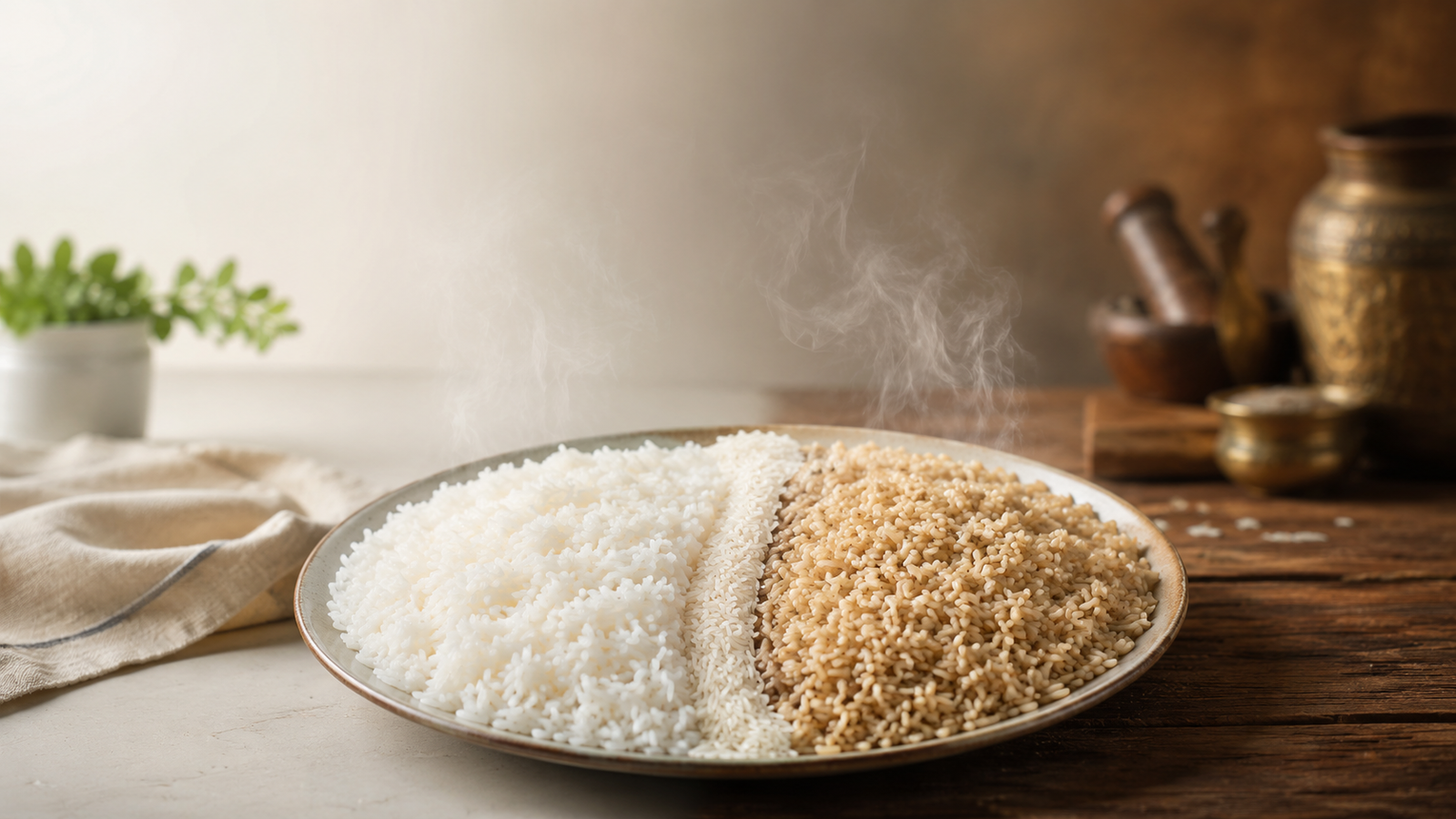
Steam Rice vs Husking Rice: Which Is Better for Daily Eating?
Rice is more than just a staple food in Indian households—it’s a part of everyday life and the heart of countless home-cooked meals. As more people become conscious about the quality of the food they eat, one common question often arises:
What is the difference between steam rice and husking rice?
While both varieties are widely consumed across India, they differ in processing, texture, taste, and everyday usability. Steam rice is known for its firm texture and commercial use, whereas husking rice is appreciated for its soft texture, natural flavour, and traditional appeal.
In this guide, we’ll compare Steam Rice vs Husking Rice based on processing, nutrition, texture, cooking quality, and daily use to help you choose the right rice for your family.
TL;DR
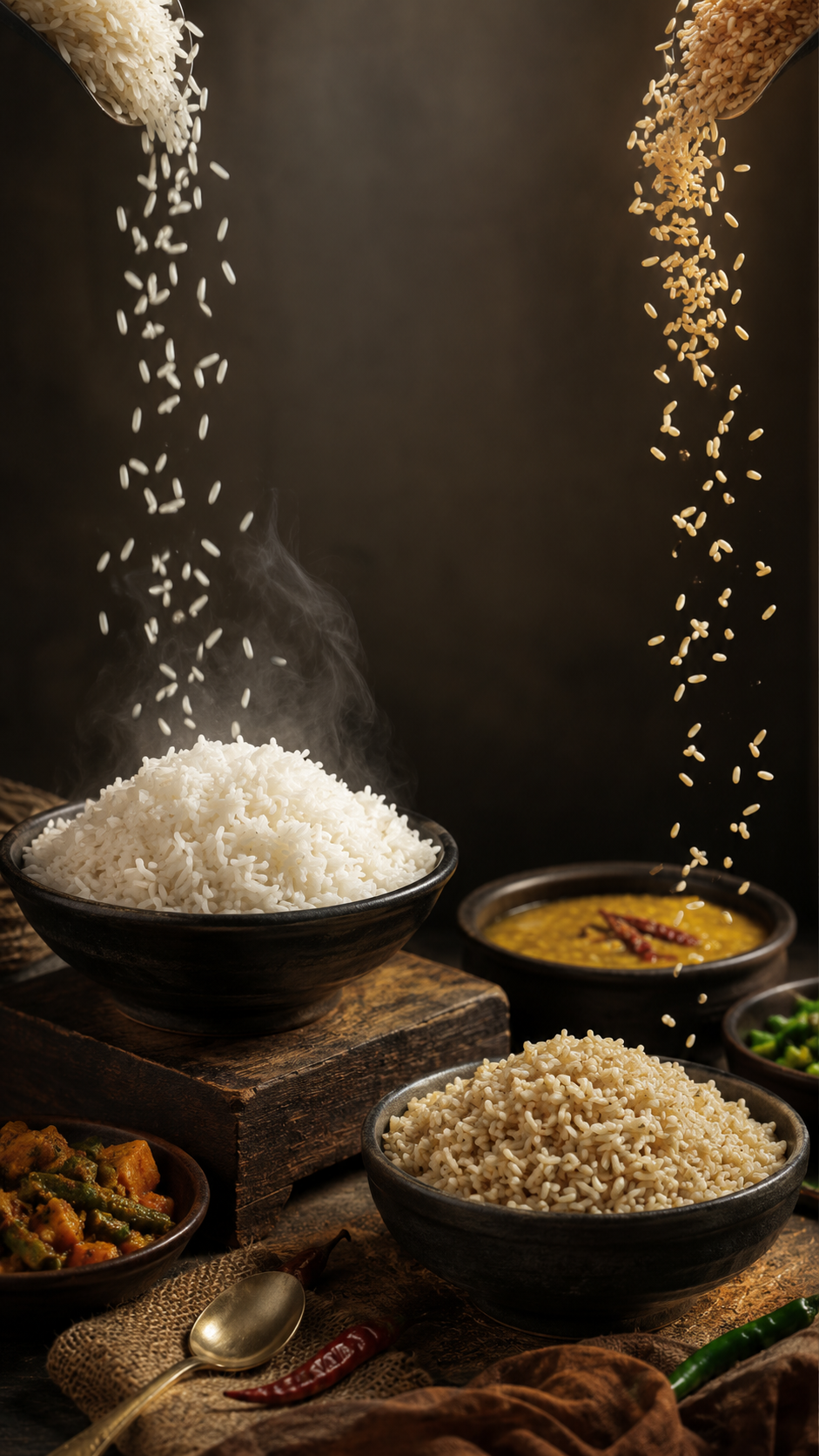
Steam rice is steamed before milling, making it firmer, less sticky, and suitable for bulk cooking. Husking rice is minimally polished after removing the husk, helping preserve more of the grain’s natural texture, aroma, and flavour.
While both have their advantages, husking rice is often preferred for everyday home cooking, especially in Indian and Bengali households, because of its soft texture, comforting taste, and natural eating experience.
What Is Steam Rice?
Steam rice is rice that undergoes a steaming (or parboiling) process before milling. This strengthens the grains and improves their durability during storage and cooking.
The steaming process helps:
- Improve shelf life
- Reduce grain breakage
- Keep grains firmer after cooking
- Increase storage durability
Because of these qualities, steam rice is commonly used in:
- Hotels
- Restaurants
- Commercial kitchens
- Large-scale cooking
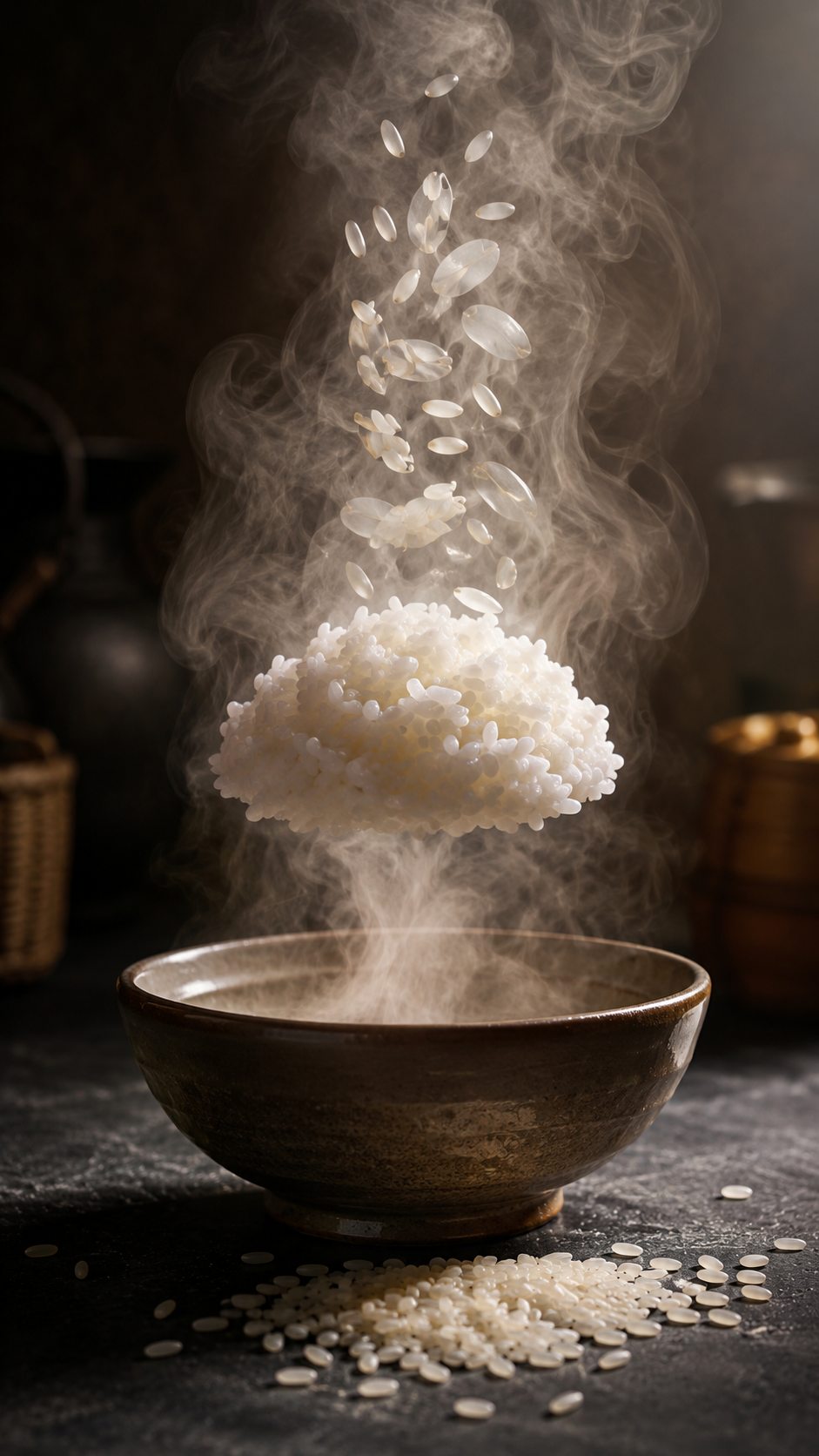
After cooking, steam rice typically has firm, separate grains, making it suitable for dishes like fried rice, pulao, and buffet-style meals. While it performs well in commercial settings, many families looking for softer, home-style rice often prefer other varieties for everyday meals.
What Is Husking Rice?
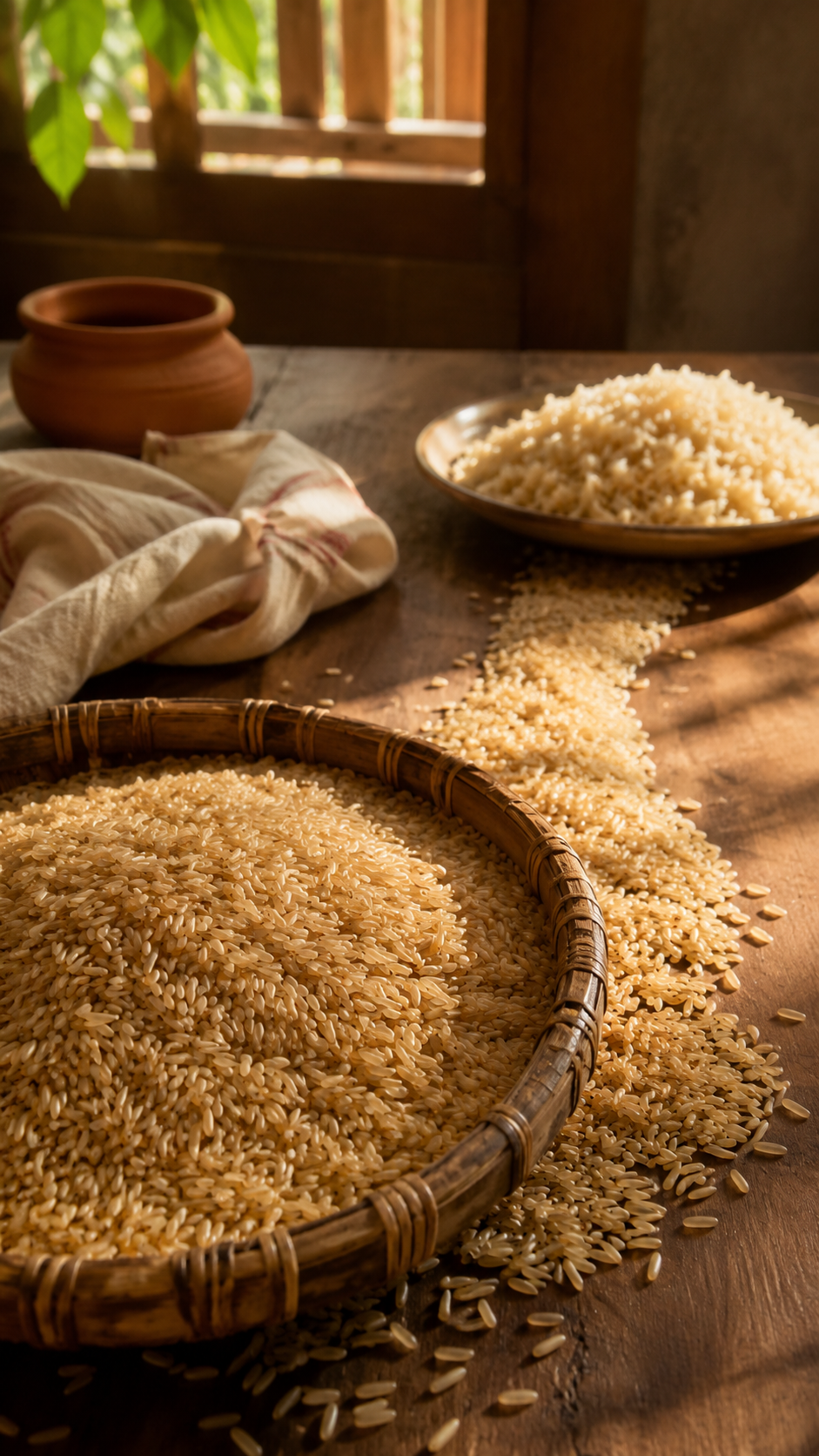
Husking rice is produced by removing only the outer husk while keeping polishing to a minimum. Because it undergoes less processing than heavily polished rice, it retains more of its natural character, including its texture, aroma, and authentic flavour.
This gentle processing helps preserve qualities that many families appreciate in their daily meals, such as:
- Naturally soft cooked texture
- Pleasant aroma
- Rich traditional taste
- Better retention of the grain’s natural characteristics
For generations, husking rice has been a favourite in Bengali and Eastern Indian households. Its soft, fluffy texture absorbs curries beautifully, making it an ideal companion for traditional home-cooked dishes.
It pairs especially well with:
- Fish curry
- Dal
- Vegetable curries
- Aloo Posto
- Traditional Bengali meals
Many families choose husking rice not only for its taste but also for the comfort it brings to everyday dining. Its soft texture and natural flavour make simple home-cooked meals even more enjoyable.
Popular varieties like Appayan Husking Royal Miniket Rice and Appayan Husking Premium Miniket Rice are specially selected for families looking for authentic, soft, and flavourful rice for daily use.
Steam Rice vs Husking Rice: Quick Comparison
|
Feature |
Steam Rice |
Husking Rice |
|
Processing Method |
Steamed before milling |
Minimally polished after husk removal |
|
Texture |
Firm and fluffy |
Soft and smooth |
|
Taste |
Mild |
Rich natural taste |
|
Aroma |
Light |
Pleasant natural aroma |
|
Nutrition Retention |
Moderate |
Better retention of natural qualities |
|
Digestibility |
Moderate |
Often preferred for its soft texture |
|
Shelf Life |
Longer |
Slightly shorter |
|
Best For |
Bulk cooking & restaurants |
Daily home meals |
|
Common Usage |
Hotels & commercial kitchens |
Indian & Bengali households |
Although both rice varieties have their own strengths, the choice depends on how you enjoy your meals. If your priority is large-scale cooking with firm, separate grains, steam rice is a practical option. However, if you’re looking for soft, flavourful rice that complements everyday home-cooked meals, husking rice is often the preferred choice.
Which Rice Is Healthier?
One of the most common questions people ask is:
Which rice is healthier—steam rice or husking rice?
Both can be part of a balanced diet, but the main difference lies in how they are processed.
Since husking rice undergoes minimal polishing, it retains more of the grain’s natural characteristics compared to heavily processed rice. This is one reason why many health-conscious families prefer it for everyday meals.
Husking rice is often chosen because it offers:
- A more natural eating experience
- Soft texture and authentic flavour
- Better retention of the grain’s natural qualities
- Less processing than highly polished rice
Steam rice, however, remains a practical option for people who prefer firmer grains or cook in large quantities.
Ultimately, the healthier choice depends on your overall diet, portion size, and lifestyle. For many families seeking a less processed rice for daily meals, husking rice is often the preferred option.
Taste and Texture Difference
Taste and texture are often the deciding factors when choosing rice.
Steam Rice
Steam rice cooks into firm, separate grains with a slightly dry texture. It works well for:
- Fried rice
- Pulao
- Buffet meals
- Large-scale cooking
Husking Rice
Husking rice is known for its naturally soft, fluffy texture and rich flavour. It absorbs curries beautifully, making every bite more enjoyable.
It pairs especially well with:
- Fish curry
- Dal
- Vegetable curries
- Homemade Bengali meals
For families who enjoy soft rice with traditional home-cooked dishes, husking rice often delivers a more satisfying dining experience.
Which Rice Is Better for Daily Use?
When choosing rice for everyday cooking, most families look for:
- Soft texture
- Good taste
- Cooking consistency
- Compatibility with homemade meals
Steam Rice Is Suitable If You:
- Cook in large quantities
- Prefer firm, separate grains
- Need longer storage life
Husking Rice Is Ideal If You:
- Eat rice every day
- Prefer soft, fluffy rice
- Enjoy traditional Indian and Bengali meals
- Want naturally flavourful rice
For regular home cooking, many families choose husking rice because it complements everyday curries and offers the comforting texture associated with traditional meals.
Steam Rice vs Husking Rice for Digestion
Many households prefer softer rice for children, elderly family members, or anyone who enjoys light home-cooked meals.
Because husking rice cooks into a softer texture, it is often considered more comfortable to eat. Steam rice has a firmer texture, which some people also enjoy.
Digestion varies from person to person and depends on factors such as portion size, cooking method, and overall diet.
Which Rice Is Better for Diabetic Patients?
Many people wonder whether steam rice or husking rice is better for diabetic patients.
No rice should be considered a “diabetic rice,” and portion control remains essential.
Many health-conscious consumers choose less processed rice varieties because they retain more of their natural characteristics. However, managing diabetes depends on an overall balanced diet rather than a single food.
For healthier meals:
- Control portion sizes
- Pair rice with vegetables and protein
- Include fibre-rich foods
- Follow your doctor’s or dietitian’s advice
The Glycemic Index (GI) can be one factor to consider when understanding how carbohydrate-containing foods may affect blood glucose levels.
Price Comparison: Steam Rice vs Husking Rice
Steam rice is widely available and commonly used in restaurants and commercial kitchens because of its consistency and longer shelf life.
Premium husking rice may cost slightly more, as it focuses on preserving the grain’s natural texture and quality through minimal polishing.
For many families, the improved taste, softness, and everyday eating experience make husking rice a worthwhile choice.
Why Bengali Families Prefer Husking Rice
Rice is at the heart of Bengali cuisine, and many families prefer rice that is soft, flavourful, and pairs perfectly with traditional dishes.
Husking rice has been a trusted choice for generations because of its:
- Soft texture
- Natural aroma
- Authentic taste
- Excellent compatibility with fish curry, dal, and vegetables
Popular varieties like Appayan Husking Royal Miniket Rice, Appayan Husking Premium Miniket Rice, and Appayan Dudheshwar Rice continue to be favourites among families looking for quality rice for everyday meals.
Which Rice Should You Choose?
Choose Steam Rice If You:
- Prefer firm, separate grains
- Cook for large groups
- Need longer storage life
Choose Husking Rice If You:
- Enjoy soft rice every day
- Prefer traditional Bengali meals
- Appreciate natural flavour and aroma
- Want minimally polished rice
While both varieties have their place, husking rice is often the preferred choice for families who value comfort, taste, and everyday home cooking.
Final Verdict: Steam Rice vs Husking Rice
Both steam rice and husking rice have their own advantages.
Steam rice is well suited for commercial cooking, large gatherings, and dishes that require firm, separate grains.
Husking rice, on the other hand, stands out for its soft texture, natural flavour, pleasant aroma, and suitability for traditional Indian meals. Its minimal processing and comforting eating experience make it a popular choice for everyday dining.
If you’re looking for rice that complements homemade curries and delivers the authentic taste of traditional cooking, husking rice is often the better choice for daily family meals.
Frequently Asked Questions
Is husking rice healthier than steam rice?
Husking rice is minimally polished and retains more of the grain’s natural characteristics, making it a popular choice among health-conscious consumers.
Which rice is softer for daily eating?
Husking rice generally cooks into a softer and smoother texture than steam rice.
Why do Bengali families prefer husking rice?
Its soft texture, natural flavour, and ability to pair well with traditional Bengali dishes make it a favourite in many households.
Is steam rice good for daily use?
Yes. Steam rice is suitable for daily meals, especially for those who prefer firm, separate grains.
Which rice is better for elderly people?
Many families prefer softer rice varieties like husking rice because they are more comfortable to eat.
What is the main difference between steam rice and husking rice?
Steam rice is steamed before milling, while husking rice is minimally polished after removing the husk, helping preserve its natural texture and flavour.
Explore Premium Rice Options at Appayan Rice
Looking for authentic rice varieties for your daily meals?
Explore:
- Appayan Husking Royal Miniket Rice
- Appayan Banskathi Rice
- Appayan Dudheshwar Rice
Enjoy soft texture, authentic flavour, and premium quality rice crafted for Indian families who value great taste in every meal.